Children and teens struggling with emotional, behavioral, or mental health challenges often benefit most from treatment that incorporates their loved ones. Our adolescent and family behavioral health services are designed to support both the child and the family system and can help everyone build healthier communication patterns, coping skills, and long-term support strategies.
At HillsidesCares in Pasadena, California, we provide family-centered behavioral health treatment for children and adolescents ages 6–17. Serving families throughout Pasadena, the San Gabriel Valley, Los Angeles County, and Greater Los Angeles, our programs combine evidence-based clinical care, family involvement, and coordinated support to help youth move toward lasting stability and wellness.
Quick takeaways
- COA-accredited treatment available for children and adolescents ages 6–17
- Offering residential, partial hospitalization (PHP), and intensive outpatient (IOP) programs
- Family therapy and parent support integrated into treatment
- Psychiatry and care coordination services available
- School collaboration and transition planning
- Insurance verification available
Table of Contents
Pasadena location & areas we serve
HillsidesCares provides adolescent behavioral health treatment in Pasadena, CA, serving families throughout the San Gabriel Valley and Greater Los Angeles region. For outpatient services, families often travel to our campus from Pasadena, Altadena, South Pasadena, San Marino, Arcadia, Sierra Madre, Glendale, Eagle Rock, Highland Park, and surrounding communities, while we’ve helped families nationwide through our residential services.
940 Avenue 64
Pasadena, CA 91105
Phone: 323.784.6981
Email: [email protected]
Parking, campus tours, and directions
Our Pasadena mental health treatment facility is located at 940 Avenue 64 in Pasadena, CA, near the Arroyo Seco, west Pasadena neighborhoods, and major routes serving the San Gabriel Valley and Greater Los Angeles.
Parking is available on campus for families attending admissions appointments, therapy sessions, or campus tours. Because parking arrangements may occasionally change, our admissions team can provide the most up-to-date guidance before your visit.
Campus tours are encouraged for families who want to better understand the treatment environment before beginning care. During a tour, our team can answer questions about admissions, levels of care, family involvement, and what your child or teen may experience in treatment.
Driving from the south on the 5
If you are coming from central Los Angeles, East LA, or communities south of Pasadena, take the 5 North and follow signs for the 110 North/Pasadena Freeway. Continue north on the 110, also known as the Arroyo Seco Parkway, toward Pasadena.
Take the Avenue 64/Marmion Way exit. From the exit, follow signs toward Avenue 64 and continue to 940 Avenue 64. Use the campus signage and admissions instructions for the correct parking area.
Driving from the north on the 5
If you are coming from Burbank, the San Fernando Valley, or communities north of Pasadena, take the 5 South and connect to the 134 East/Ventura Freeway toward Pasadena.
Continue east on the 134 toward Pasadena and take the San Rafael Avenue exit. Follow San Rafael Avenue south toward west Pasadena, then continue on local streets toward Avenue 64. Use the map below for the most accurate final turns to 940 Avenue 64 and the appropriate campus parking area.
Driving from the 210
If you are coming from the east, take the 210 toward Pasadena. Continue west on the 134 and follow signs for Ventura, then take exit 12 for San Rafael Avenue. Use the map below for the most appropriate directions to 940 Avenue 64 and follow campus signs for parking.
Before you visit
Traffic on the 5, 110, 134, and 210 can vary throughout the day. Before your appointment or tour, open the map below in your preferred navigation for current traffic and call admissions if you have questions about parking, campus access, or where to go when you arrive.
Call admissions: 323.784.6981
Who we help: Children, teens, and families
Behavioral health concerns can affect every aspect of a young person’s life, including relationships, school performance, emotional well-being, and family functioning. Who we treat includes children, adolescents, and their caregivers, with support designed to help the whole family system move toward greater stability.

Children ages 6–11
Children may benefit from treatment when emotional or behavioral challenges interfere with healthy development, family relationships, school participation, or daily functioning. Treatment at HillsidesCares for children ages 6-11 incorporates a highly structured, therapeutic program to support children in developing emotional literacy, learning coping strategies, and improving socialization with peers.

Adolescents ages 12–17
Teens often face increasing academic, social, emotional, and developmental pressures. Treatment can provide structure, support, and skill development during critical years of growth. Adolescent treatment at HillsidesCares features individualized, trauma-informed treatment designed to strengthen coping skills, emotional regulation, healthy relationships, and overall well-being.
Parents and caregivers
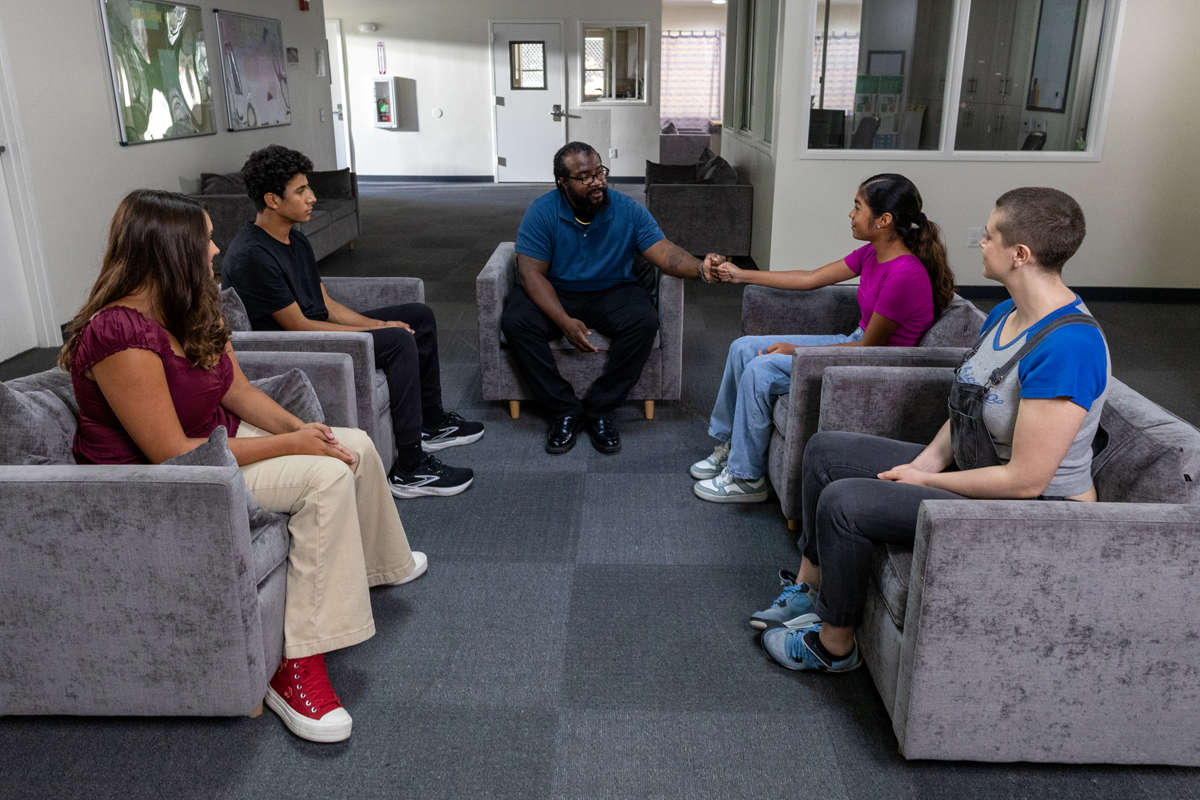
Parent and caregiver engagement is a core component of the HIllsidesCares treatment program. Caregivers gain the tools and confidence needed to support their child’s progress during treatment through family therapy, multifamily group therapy, parent education, and ongoing collaboration with the treatment team.
Referral partners
We collaborate with therapists, pediatricians, schools, hospitals, discharge planners, and community providers when appropriate.
Not sure where to start? Call 323.784.6981 for admissions guidance.
When your child may need behavioral health support
Every child experiences challenges from time to time. However, some situations may indicate a need for more structured adolescent mental health treatment.
If your child is experiencing a mental health emergency or is at immediate risk of harming themselves or others, call 911 or contact the Suicide and Crisis Lifeline at 988 immediately.
Signs may include:
- Ongoing anxiety, sadness, or withdrawal
- Significant changes in mood or behavior
- School refusal or declining academic performance
- Difficulty functioning at home or in social settings
- Family conflict that continues to escalate
- Trauma-related symptoms
- Emotional dysregulation or behavioral outbursts
- Self-harm concerns
- Transition needs following hospitalization or crisis stabilization
- Lack of progress with traditional outpatient therapy
What adolescent & family behavioral health services include
Our behavioral health treatment programs address the emotional, behavioral, social, and family factors that contribute to a child’s overall well-being.
Services may include:
- Individual therapy
- Group therapy
- Multifamily group therapy
- Psychiatric evaluation and medication support when appropriate
- Parent education and coaching
- Skill-building interventions
- Care coordination
- School collaboration
- Aftercare planning
Our treatment approach incorporates evidence-based practices, including cognitive-behavioral therapy (CBT), dialectical behavior therapy (DBT), trauma-focused CBT (TF-CBT), Seeking Safety, and Aggression Replacement Training (ART).
Conditions and concerns we support
Treatment may help children and adolescents experiencing:
- Depression
- Anxiety disorders
- Trauma and PTSD
- ADHD
- Bipolar disorder
- Social anxiety
- Emotional dysregulation
- Behavioral challenges
- Family conflict
- School refusal
- Grief and loss
- Psychosis
- Schizoaffective disorder
- Self-harm
- Mood instability
- Co-occurring mental health and substance use concerns
- Step-down support after hospitalization
Levels of care: Residential, PHP, IOP, and aftercare
HillsidesCares offers multiple levels of care for children and adolescents ages 6–17, allowing families to access the right level of support based on clinical needs, safety, family goals, and daily functioning.
| Level of Care | Best For | Care Intensity | Does the Client Return Home? | Family Involvement | Next Step |
|---|---|---|---|---|---|
| Residential Care | Children and teens who need 24/7 support, stabilization, and a structured therapeutic environment | Highest | No. Clients live on campus in residential cottages during treatment. | Multifamily therapy, parent support, visits when clinically appropriate, and discharge planning | Talk with our admissions team or your child’s physician |
| Partial Hospitalization Program (PHP) | Youth who need intensive daytime treatment but can safely return home outside program hours | High | Yes. Clients participate in structured treatment during the day and return home afterward. | Family therapy, caregiver participation, care coordination, and transition planning | Ask whether PHP is the right fit or a step-down from residential care |
| Intensive Outpatient Program (IOP) | Youth who need more support than weekly therapy while spending more time at home, school, or in the community | Moderate | Yes. Clients attend treatment several days per week while maintaining more daily routine. | Family support, skill-building reinforcement, multifamily therapy, and coordination with the care team | Ask whether IOP is appropriate as a starting point or step-down level of care |
| Aftercare Planning | Youth completing residential, PHP, or IOP | Ongoing support | Yes. Aftercare supports the transition back to everyday life. | Family guidance, referrals, check-ins, and connection to community supports | Work with the treatment team to plan continued care after discharge |
Family involvement & parent support
Family involvement is a core component of treatment at HillsidesCares. Parents are encouraged to participate in family counseling and ongoing communication with the treatment team. All of this is designed to strengthen relationships and improve long-term outcomes for our clients.
HillsidesCares also collaborates with community partners, including Fusion Academy, to support families as youth transition out of therapeutic care and back into academic routines. Through community parenting workshops and transition-focused collaboration, families can access additional tools for navigating stressful life changes, reducing academic anxiety, and supporting a thoughtful return to school.
Families are encouraged to visit their children on campus throughout treatment. Visitation hours are determined on a case-by-case basis based on each client’s needs, treatment plan, and clinical safety. When appropriate, parents may also receive off-campus passes to enjoy community activities with their child, such as going to lunch or taking a walk. Virtual visits are also available.
School & care coordination
Behavioral health challenges can affect school attendance, academic progress, and day-to-day functioning. At HillsidesCares, the first priority is helping each child or teen achieve psychological stability. When a client is ready to focus on schoolwork, our team can work with the family to support the educational plan agreed upon by the client’s school district of origin.
Depending on the child’s needs and district plan, this may include support for independent study, home hospital instruction, school packets, virtual learning, or another approved academic arrangement. HillsidesCares case managers can also assist with IEP/504 coordination, planning, and evaluations, and the treatment team can support and advocate for the client and family during school meetings when appropriate.
Our goal is to help families maintain treatment progress while supporting a thoughtful transition back to school when clinically appropriate.
What to expect from admissions
Beginning treatment can feel overwhelming. Our admissions team is here to guide families or referral partners through every step.
Step 1: Contact admissions
Speak with a member of our admissions team about your child’s needs.
Step 2: Complete an assessment
We gather clinical information and determine whether HillsidesCares may be an appropriate fit.
Step 3: Verify insurance & determine level of care
Our team reviews insurance benefits and clinical needs to identify the most appropriate treatment recommendation.
Step 4: Begin treatment
Families receive guidance throughout the enrollment process and transition into care.
Insurance verification and payment support
HillsidesCares works with a wide range of insurance providers to help families access treatment, including:
- Anthem Blue Cross
- Blue Shield of California
- Carelon Behavioral Health
- Evernorth Behavioral Health
- Kaiser Permanente
- Magellan
- Optum
- TRICARE
Our admissions team can help families verify benefits and understand whether a recommended level of care may be covered. When you call, it may be helpful to have your insurance card, policyholder information, and any recent clinical or referral documentation available.
Why choose HillsidesCares in Pasadena?
Families choose HillsidesCares because of our commitment to individualized, family-centered care. Hillsides, the nonprofit behind HillsidesCares, has served children, youth, and families in Southern California for more than 100 years. We began in Pasadena in 1913 with a mission to provide a safe, nurturing environment for children in need of support. Today, HillsidesCares continues that mission through behavioral health treatment for children, adolescents, and families, with a campus that offers:
- Care for children and adolescents ages 6–17
- Residential care, PHP, IOP, and aftercare planning
- Trauma-informed care
- COA accreditation
- Evidence-based therapies, including CBT, DBT, TF-CBT, Seeking Safety, and ART
- School collaboration when clinically appropriate
- A multidisciplinary treatment team
- A peaceful 17-acre Pasadena campus
- Therapeutic amenities, including art, music, recreation, culinary activities, and outdoor spaces
- Age-divided residential cottages
- LGBTQ+ affirming care
- Campus tours for prospective families
Our dedicated staff
-
- Psychiatrists
- Mental health clinicians
- Behavioral specialists
- Licensed vocational nurses
- Case managers
- Recreational and support staff

Andrew Hernandez, MPA
Senior Director, Campus Based Services

Casey Meinster, LMFT
Division Chief, Campus Based Services

Stacey Roth, LCSW
Chief Executive Officer

Gina Perez, PsyD
Chief Operating Officer and President
Frequently asked questions
HillsidesCares offers a full continuum of care for behavioral health treatment. Our clients are assessed and given tailored treatment plans designed to meet their specific treatment and recovery goals. In many cases, clients may step down from one level of care to a less intensive level as they progress along their treatment plan. We offer the following levels of care:
HillsidesCares offers residential care, partial hospitalization (PHP), intensive outpatient (IOP), and aftercare planning. Our admissions team can help families understand which level of care may be appropriate based on clinical needs, safety, and daily functioning.
The right level of care depends on your child’s symptoms, safety needs, family goals, and current level of functioning. Residential care provides 24/7 support, while PHP and IOP offer structured treatment for clients who can safely return home outside program hours.
Family involvement is a core part of treatment at HillsidesCares. Parents may participate in family counseling, multi-family therapy, regular check-ins, parent support, and treatment updates from the care team.
Yes. Families are encouraged to visit their children on campus throughout treatment. Visitation is determined on a case-by-case basis based on each client’s needs, treatment plan, and clinical safety. Virtual visits are also available.
The first priority is helping each client achieve psychological stability. When a client is ready to focus on schoolwork, our team can work with the family to support the educational plan agreed upon by the client’s school district of origin, such as independent study, home hospital instruction, packets, or virtual learning.
The multidisciplinary treatment team may include psychiatrists, mental health clinicians, behavioral specialists, licensed vocational nurses, case managers, and recreational or support staff.
HillsidesCares works with a wide range of insurance providers. Families can contact admissions to verify benefits and better understand coverage for the recommended level of care.
After treatment, many clients continue care through a lower level of treatment, outpatient support, or community-based services. The treatment team helps families plan next steps, identify referrals, and support the transition after discharge.
Contact the HillsidesCares admissions team to discuss your child’s needs, ask questions, verify insurance, and learn whether an assessment or campus tour may be the right next step.
It’s Okay to Ask for Help. Your Family’s Healing Can Start Today
Reaching out for support can feel overwhelming, but you do not have to navigate this alone. Whether you are calling as a parent, caregiver, school professional, or healthcare provider, our admissions team is here to listen, answer questions, and help guide next steps.
"*" indicates required fields