

Parents looking for teen intensive outpatient programs in Pasadena, CA, generally want flexible, evidence-based care that still fits school and family life. This guide explains how intensive outpatient programs work for adolescents, what a typical day can look like, how many days per week teens attend, and how local Pasadena resources like HillsidesCares can support your child’s mental health and healing.
What is a teen mental health intensive outpatient program?
A teen intensive outpatient program (IOP) is a structured mental health treatment option for adolescents who need more support than weekly outpatient therapy but do not require 24/7 residential care. In an IOP, clients participate in multiple therapy sessions several days a week in an outpatient setting, then return home each day. Many teen IOP programs use a mix of individual therapy, group therapy, family therapy, and medication management (if appropriate) to address mental health conditions and co-occurring concerns.
Intensive outpatient programs are part of a continuum of behavioral health care. If a teen needs more support than an IOP provides, a partial hospitalization program (PHP) offers similar services for more hours per week. For youth who need round-the-clock stabilization and health monitoring, a residential treatment program is best. Every treatment plan at HillsidesCares is tailored to individual needs, and the goal is to match services to the safest, least restrictive level of care that will help teens move forward.
How IOP compares with other levels of care
- Intensive outpatient treatment: 3 to 5 days per week, several hours per day; teens live at home; strong focus on individual, group, and family therapy
- Partial hospitalization: More hours per day than IOP, often 5 days per week; greater structure while still allowing teens to return home nightly
- Residential or inpatient care: 24/7 supervision in a treatment center; used for acute safety needs such as severe suicidal ideation, uncontrolled self-harm, or medical instability
Across these programs, the emphasis is on skill building, stabilization, and supporting healthy routines.
How often will my teen attend IOP?
Most teen mental health IOP programs meet 3 to 5 days per week, typically 3 to 4 hours per day. Scheduling is often set in the afternoon or early evening, allowing teens to attend school and maintain everyday life activities. Your intake team will confirm days and times during the initial assessment and adjust the treatment plan as your teen progresses.
Can my teen still go to school while in an IOP?
Yes. A key benefit of intensive outpatient programs is flexibility, allowing teens to stay enrolled in school while receiving structured care. IOP programs coordinate with families to choose times that minimize disruptions to classes, homework, and extracurriculars. If a teen needs temporary academic adjustments, your care team can suggest strategies to support learning and health during treatment.
How long do IOP programs typically last?
Most IOP programs run 6 to 12 weeks, though length can be shorter or longer based on clinical needs, safety, participation, and progress on goals. Your teen’s therapist will review the treatment plan weekly, make updates, and recommend step-down care, such as a less intensive outpatient therapy schedule, when appropriate.
By understanding what to expect from a teen intensive outpatient program in Pasadena, families can better plan for school, transportation, meals, and daily activities during this phase of care.
What happens during each IOP session?
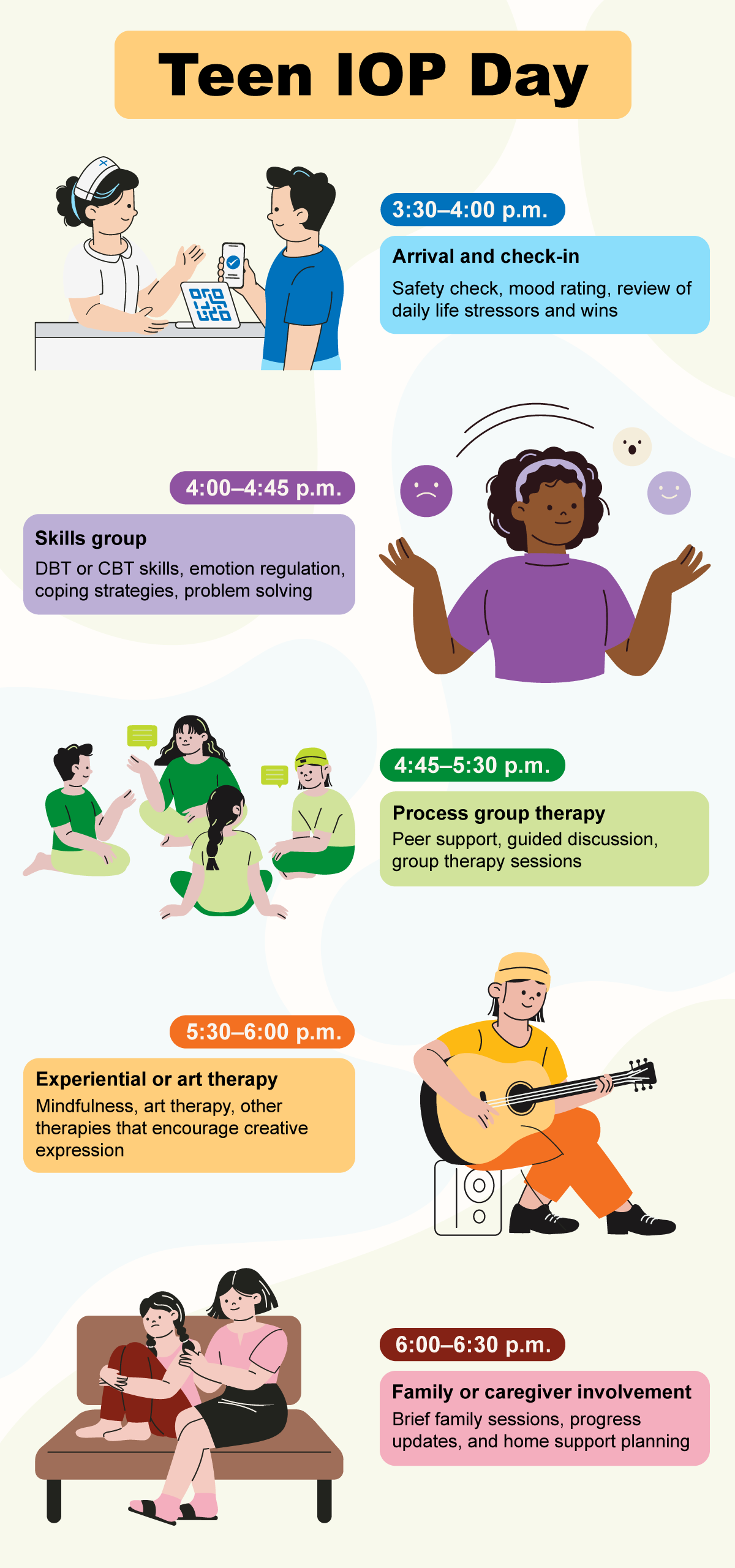
Every program organizes sessions a little differently, but most include a mix of evidence-based therapeutic approaches and set times to check in on safety and goals. Below is an example daily outline you might see in an outpatient setting.
What kinds of therapy are included in IOP?
Most teen IOP programs combine multiple therapeutic modalities to address the underlying causes of symptoms and to treat depression, anxiety, bipolar disorder, trauma, eating disorders, and co-occurring substance use. Common components include:
- Individual therapy: 1 to 2 times per week to work on personal goals, cognitive behavioral strategies, and safety planning.
- Group therapy: Daily or near-daily groups focus on social skills, distress tolerance, and building supportive peer connections.
- Family therapy: Parents and caregivers learn communication tools, boundary setting, and ways to support well-being at home.
- Medication management: Psychiatric evaluation and follow-up, when indicated, to address symptoms tied to a mental health condition.
- Experiential therapy: Movement, mindfulness, art therapy, and creative activities to help teens process emotions and practice new coping skills.
- Psychoeducation: Age-appropriate information about mental health challenges, suicidal ideation warning signs, self-harm risk reduction, and recovery skills.
These services are delivered by licensed professionals using evidence-based approaches such as cognitive behavioral therapy, dialectical behavior therapy, and motivational interviewing.
Safety, support, and school balance
A teen IOP is designed to be a safe and supportive environment. Care teams check on suicidal thoughts, triggers for self-harm, and substance use risks. Parents receive guidance on home safety and collaboration with the treatment center, including when to consider a step up to a higher level of care like a partial hospitalization program if safety needs change.
Why choose a Pasadena-based mental health IOP?
For many families, staying close to school, home, and pediatric providers makes treatment more manageable. HillsidesCares’ convenient Pasadena location can reduce commute stress, improve attendance, and support consistent family involvement. Our treatment center can coordinate with Pasadena-area schools and pediatricians, which helps align the treatment plan with academic supports and health needs.
Benefits of a Pasadena-based intensive outpatient program include:
- Proximity, which supports families in maintaining routines in a comfortable setting
- Access to other Southern California resources, including referral pathways if a higher level of care is needed
- Community context, so teens practice skills where they live, study, and socialize
- Comprehensive care and smoother transitions between levels of care
When evaluating outpatient programs, ask about the program’s experience with adolescent disorders, co-occurring conditions, and the ages they serve. Look for a clear intake process, a holistic approach to assessment, and regularly scheduled family sessions. High quality care starts with a thorough evaluation and a practical plan that fits your teen’s specific needs.
Who is a good fit for mental health IOP?
Teen IOP is a strong fit for young people who need more than weekly outpatient therapy but are safe to live at home. It is frequently recommended for youth with:
- Anxiety and depression symptoms that disrupt school or friendships
- Bipolar disorder or mood instability that needs monitoring and skills practice
- Trauma responses and related avoidance or emotional numbing
- Eating disorders that require structured support without round-the-clock monitoring
- Co-occurring substance use, where relapse prevention and family involvement are essential
Warning signs that it’s time to seek professional mental health help include increased isolation, school refusal, panic attacks, frequent conflicts at home, passive suicidal ideation, urges for self-harm, or difficulty managing daily life despite weekly therapy. Teens with active suicidal ideation with intent, recent serious suicide attempts, or medical instability often need a higher level of care first.
If your clinician recommends more structure than intensive outpatient, you can discuss a partial hospitalization program or, when needed, residential services. Our team can guide you to the safest option.
Are intensive outpatient programs worth it?
For many families, the benefits of intensive outpatient programs include measurable symptom reduction, stronger coping abilities, and better school and family functioning, all while maintaining everyday life routines. IOP programs help teens practice skills in real time after sessions, then bring successes and challenges back to therapy to integrate with further coaching. Families often report improved communication and more predictable routines at home.
Because IOP occurs in an outpatient setting, teens develop and test new skills where they live, learn, and socialize. This real-world practice accelerates progress for many clients and supports long-term healing. To explore programs and levels of care in your area, visit SAMHSA’s treatment locator.
Insurance, access, and next steps
Are intensive outpatient programs covered by insurance?
Coverage varies by insurance company and plan. Many IOP programs work with major insurance providers, and most treatment centers can verify benefits before the first appointment. It is helpful to call your insurance company to ask about preauthorization, in-network providers, and co-pays for mental health outpatient programs.
What to expect at intake
- Clinical assessment: A licensed clinician asks about symptoms, safety, medical history, and prior mental health treatment to build a clear picture of your teen’s needs.
- Personalized treatment plan: Goals include symptom reduction, school support, coping skills, and family communication skills. Plans adjust as clients progress.
- Schedule and services: The team explains days and times, required family therapy sessions, and how group therapy and other therapies are structured.
- Coordination: With your consent, the team may coordinate with your teen’s pediatrician, school, or other providers to support comprehensive care.
If your teen may benefit from more structure before stepping into intensive outpatient, consider whether a partial hospitalization program is appropriate.
Is IOP Right for Your Teen?
Talk with our team about a Pasadena-area IOP, scheduling, and next steps.
Conditions commonly addressed in teen IOP
Intensive outpatient programs for adolescent mental health often support clients with:
- Depression, anxiety, and bipolar disorder
- Trauma-related symptoms and adjustment disorders
- Eating disorders that are stable enough for outpatient care
- Co-occurring substance use alongside a primary mental health condition
- Suicidal ideation and self-harm urges that can be safely monitored without 24/7 care
IOP treatment goals
Treatment goals are customized to individual needs and may include:
- Reducing depressive symptoms and panic frequency
- Increasing school attendance and participation in services and activities
- Strengthening family communication through structured family sessions
- Building coping strategies, relapse prevention skills, and safety plans
- Improving sleep, nutrition, and overall mental health and well-being
Each treatment plan at HillsidesCares includes measurable targets, updates over time, and step-down planning. As progress builds, many teens transition to weekly outpatient therapy to continue their healing journey.
Tips for choosing an IOP for teens in Pasadena
When comparing programs in Pasadena and greater Southern California, consider asking about:
- Assessment and staffing: Who conducts the intake, and which licensed professionals lead groups and oversee medication management?
- Therapeutic approaches: Which evidence-based therapeutic modalities are used, and how do they match your teen’s specific needs?
- Family involvement: How often are family sessions held, and what parent coaching is available?
- Safety practices: How are suicidal thoughts, self-harm risks, and substance use monitored in an outpatient setting?
- School coordination: How does the program support academic participation and scheduling?
- Step-down planning: How will the team plan a step-down to less intensive outpatient therapy or other aftercare services?
You can also discuss how the treatment center collaborates with pediatricians or local services, how progress is measured, and how often the treatment plan is updated to support your teen’s health.
Take the next step with HillsidesCares
Understanding what to expect from a teen intensive outpatient program in Pasadena can empower you to make the best choice for your child’s mental health. HillsidesCares offers compassionate, evidence-based care designed to fit your teen’s life while providing the structure and support they need to heal and thrive. Contact HillsidesCares today to learn more and start your teen’s healing journey.